Skip to content
D-FENCE Electronic Fencing and Security Systems Ltd.D-FENCE Electronic Fencing and Security Systems Ltd.

The threat · Intruders crossing floors, decks or steps unseen?

D-Floor

Pressure sensors under tiles, stone, wood or steel turn any floor, deck or stair into a silent alarm zone.

Invisible installation
Any floor finishNo size limitAnimals < 25 kg ignored
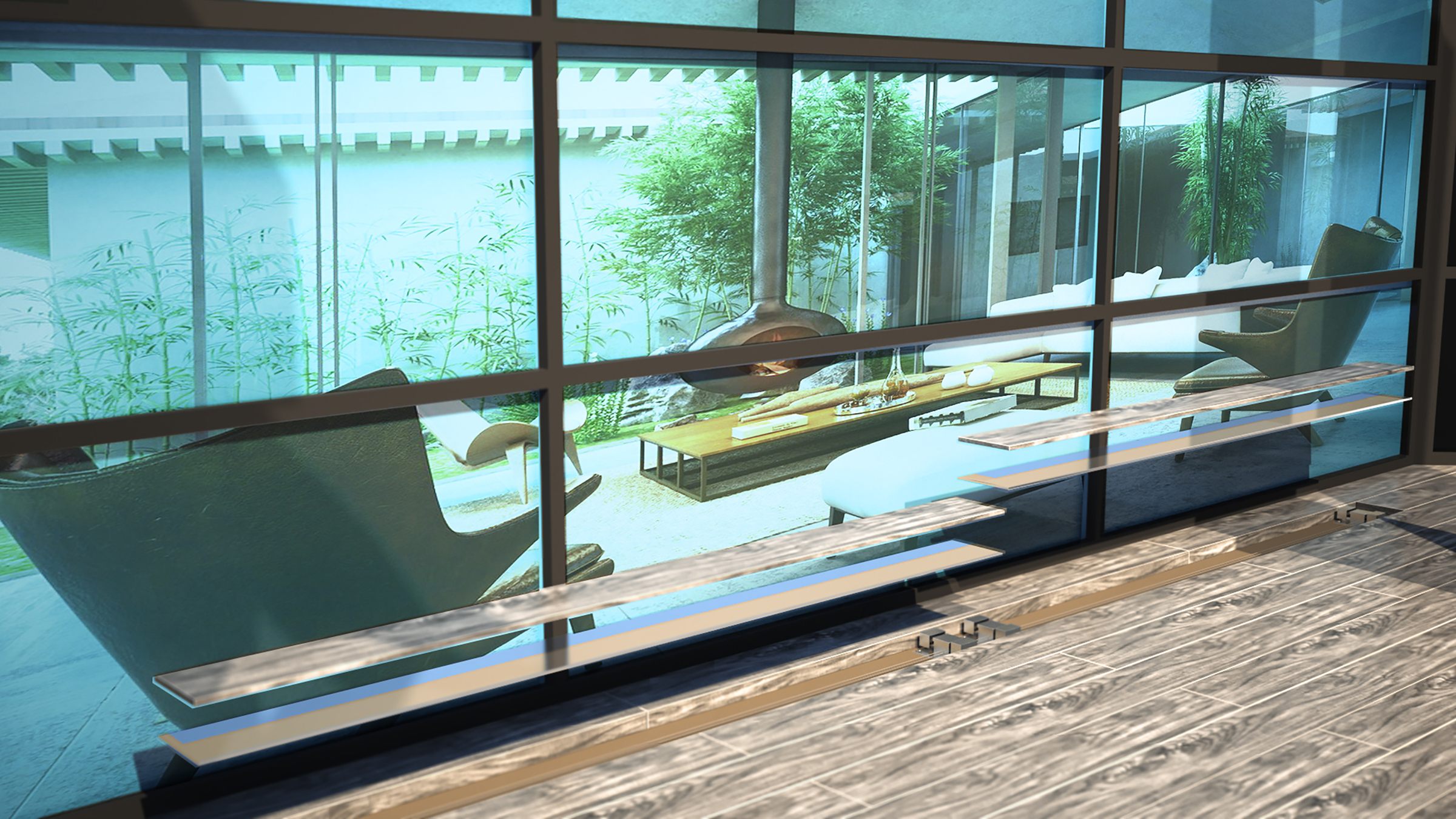
Living room with a full-height glass facade onto a bamboo courtyard; the floor boards along the glass are lifted to show D-FENCE pressure sensors beneath

Nobody crosses this floor unannounced.

D-Floor places D-FENCE pressure sensors on rails beneath the floor finish: tile, stone, wooden or stainless-steel flooring. There is no limit on the size of the protected area. When an intruder walks onto it, the change in pressure raises an alarm; animals under about 25 kg do not.

01

Catch the intruder inside the line

The floor itself reports him, after the wall and before the door.

02

Nothing to see, nothing to avoid

The zone is hidden, so an intruder cannot step around it.

03

Pets and weather stay quiet

The weight threshold ignores animals under about 25 kg.

The same system is called D-Deck when it protects decking, passages, terraces and hallways, and D-Step when it is built into steps and stair treads. It can be installed permanently or temporarily, under metallic, wooden or plastic surfaces, and keeps an invisible look. The SECURITY Book lists D-Deck and D-Step for museums, high-rise buildings, offshore platforms and ships.

Typical zones are entrances and thresholds, pool decks, the floor in front of a safe or at the entrance to a classified room, and prison-cell floors. The alarm is sent to the D-FENCE control centre and to the cameras, sirens and phone apps you connect.

From the first touch to the right response.

  1. Floor sensors

    Pressure sensors on rails sit under the tiles, boards or plates.

  2. A step on the zone

    A person's weight changes the load; animals under about 25 kg stay below the threshold.

  3. Controller

    The alarm leaves as a dry contact or RS232 / RS485 message.

  4. Control centre

    The D-FENCE control centre, cameras and phone apps receive the event.

Seen in full.

Every image opens full size. Product sheets are shown whole, exactly as D-FENCE publishes them.

Specifications & documents.

SpecificationsD-Floor
Installed beneath
Tile, stone, wooden or stainless-steel flooring; metallic, wood or plastic decks
Installation size
No limitation
Detects
Stepping on or climbing onto the protected area
Animal immunity
Animals under about 25 kg do not trigger an alarm
Installation
Permanent or temporary
Variants
D-Deck (decks, passages, terraces, hallways) · D-Step (steps and stairs)
Detection force (residential range)
Standard 25 kg
Length of detection zone (residential range)
Max. 60 m
Processing unit (residential range)
Max. 16 sensors
Dry contact (residential range)
N.O. & N.C., 1A@12VDC
Power supply (residential range)
105mA@12VDC
Communication output
RS232 / RS485
Operating temperature
+72 °C to −25 °C (162 °F to −13 °F)
Humidity
> 95%
False alarm rate (catalogue)
Less than 1 per km per 3 months
MTBF
4.7 × 10⁸ h

Specification text, ready for your tender.

Copy it into your specification. It describes the system by what it must do, so any alternative has to meet every point.

D-FloorTender specification textDatasheet
  1. General

    The system shall be D-Floor by D-FENCE Electronic Fencing and Security Systems Ltd. (ISO 9001:2015 certified quality management), or an approved equivalent that meets every requirement in this section.

  2. Function

    Pressure sensors under tiles, stone, wood or steel turn any floor, deck or stair into a silent alarm zone.
  3. The system shall provide

    • Under any finish: Tile, stone, wooden or stainless-steel flooring; metallic, wood or plastic decks.
    • No size limit: From a single doormat to a whole terrace or hallway.
    • Animal-tolerant: Animals weighing under about 25 kg do not trigger an alarm.
    • Invisible: The protected tiles look exactly like every other tile on the floor.
    • Decks and steps: D-Deck for decks, passages and terraces; D-Step for steps and stairs.
    • Permanent or temporary: Built into a new floor, or laid for an event or a period of risk.
  4. Technical requirements

    • Installed beneath: Tile, stone, wooden or stainless-steel flooring; metallic, wood or plastic decks
    • Installation size: No limitation
    • Detects: Stepping on or climbing onto the protected area
    • Animal immunity: Animals under about 25 kg do not trigger an alarm
    • Installation: Permanent or temporary
    • Variants: D-Deck (decks, passages, terraces, hallways) · D-Step (steps and stairs)
    • Detection force (residential range): Standard 25 kg
    • Length of detection zone (residential range): Max. 60 m
    • Processing unit (residential range): Max. 16 sensors
    • Dry contact (residential range): N.O. & N.C., 1A@12VDC
    • Power supply (residential range): 105mA@12VDC
    • Communication output: RS232 / RS485
    • Operating temperature: +72 °C to −25 °C (162 °F to −13 °F)
    • Humidity: > 95%
    • False alarm rate (catalogue): Less than 1 per km per 3 months
    • MTBF: 4.7 × 10⁸ h
  5. Detection sequence

    1. Floor sensors: Pressure sensors on rails sit under the tiles, boards or plates.
    2. A step on the zone: A person's weight changes the load; animals under about 25 kg stay below the threshold.
    3. Controller: The alarm leaves as a dry contact or RS232 / RS485 message.
    4. Control centre: The D-FENCE control centre, cameras and phone apps receive the event.
  6. Submittals

    Before installation, the contractor shall submit the manufacturer's datasheet, the installation instructions and the zone layout for approval.

Discuss your project.

Tell us the site, the threat and the line. D-FENCE engineers will propose the right barrier, sensor and platform, ready for your integrator.
Build the full line.