Skip to content
D-FENCE Electronic Fencing and Security Systems Ltd.D-FENCE Electronic Fencing and Security Systems Ltd.

The threat · Drones overhead, or cameras being blinded?

D-DOME

Multi-sensor drone detection that fuses radar, RF, Remote ID and EO/IR into one threat score, and alerts your control room early.

Up to 5 km (radar dependent)Up to 200 targetsIP66
D-DOME concept render: radar and RF sensor units watch the sky while a protective dome covers a base; incoming drones are tracked and classified

Drones don't stop at the fence line.

D-DOME is D-FENCE's multi-layer system for early detection and classification of aerial threats. Radar, RF signal analysis, Remote ID, EO/IR cameras and flight-behaviour analysis feed one soft-logic engine that scores every target in real time, from likely friendly to probable hostile.

01

See it early

Long-range detection gives your team time to act before the drone arrives.

02

One clear threat score

Every sensing layer fused into a single probability, with minimized false alarms.

03

Uses what you already run

Works with existing cameras, the AI-EYE trailer or a fixed mast, and feeds your C2.

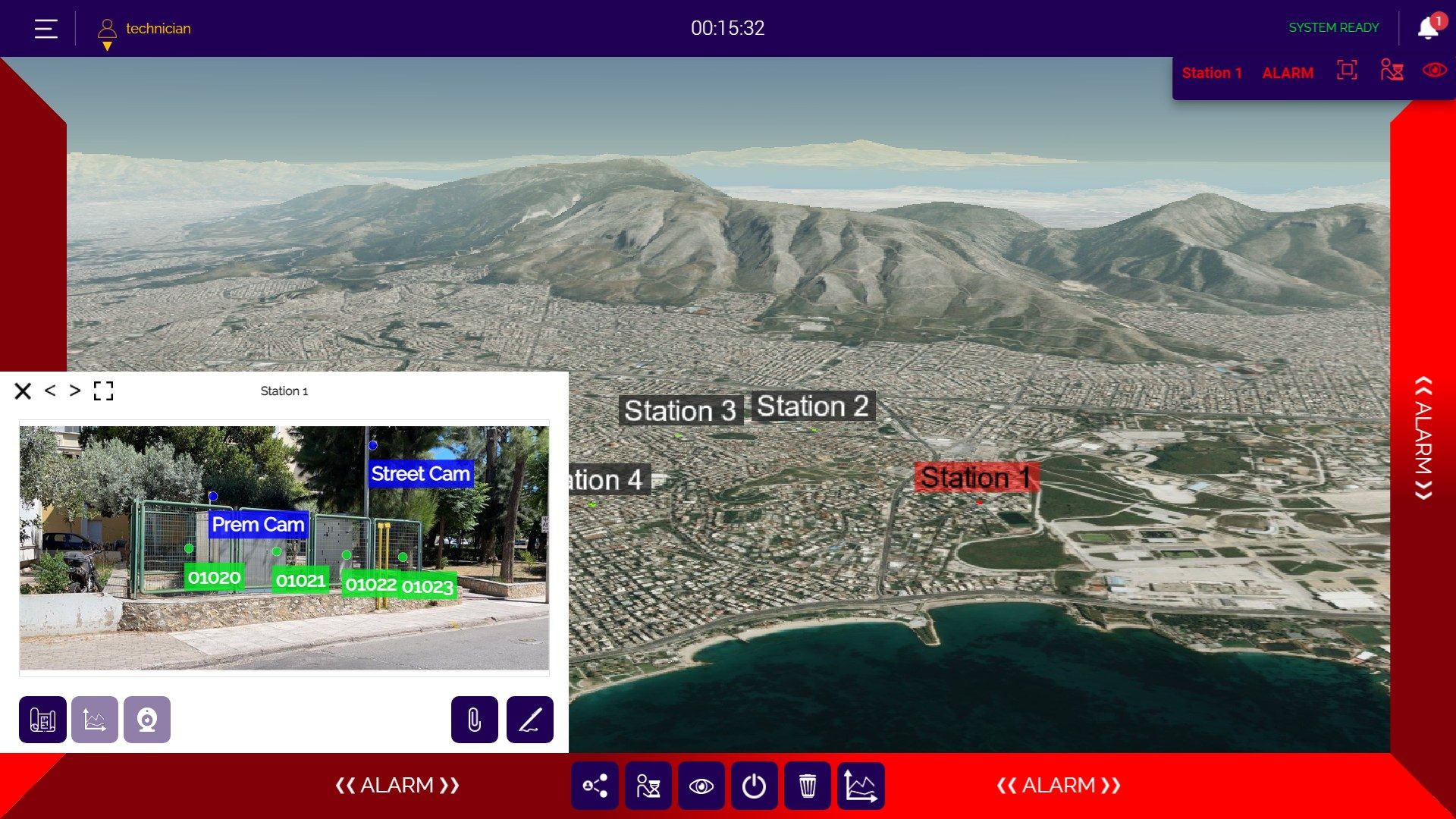
The same AI analytics run on the cameras you already have. Any ONVIF / RTSP stream becomes a sensor that recognises intrusion, fence climbing and drones, and raises an alert when a camera is blinded, dazzled by a laser or jammed.

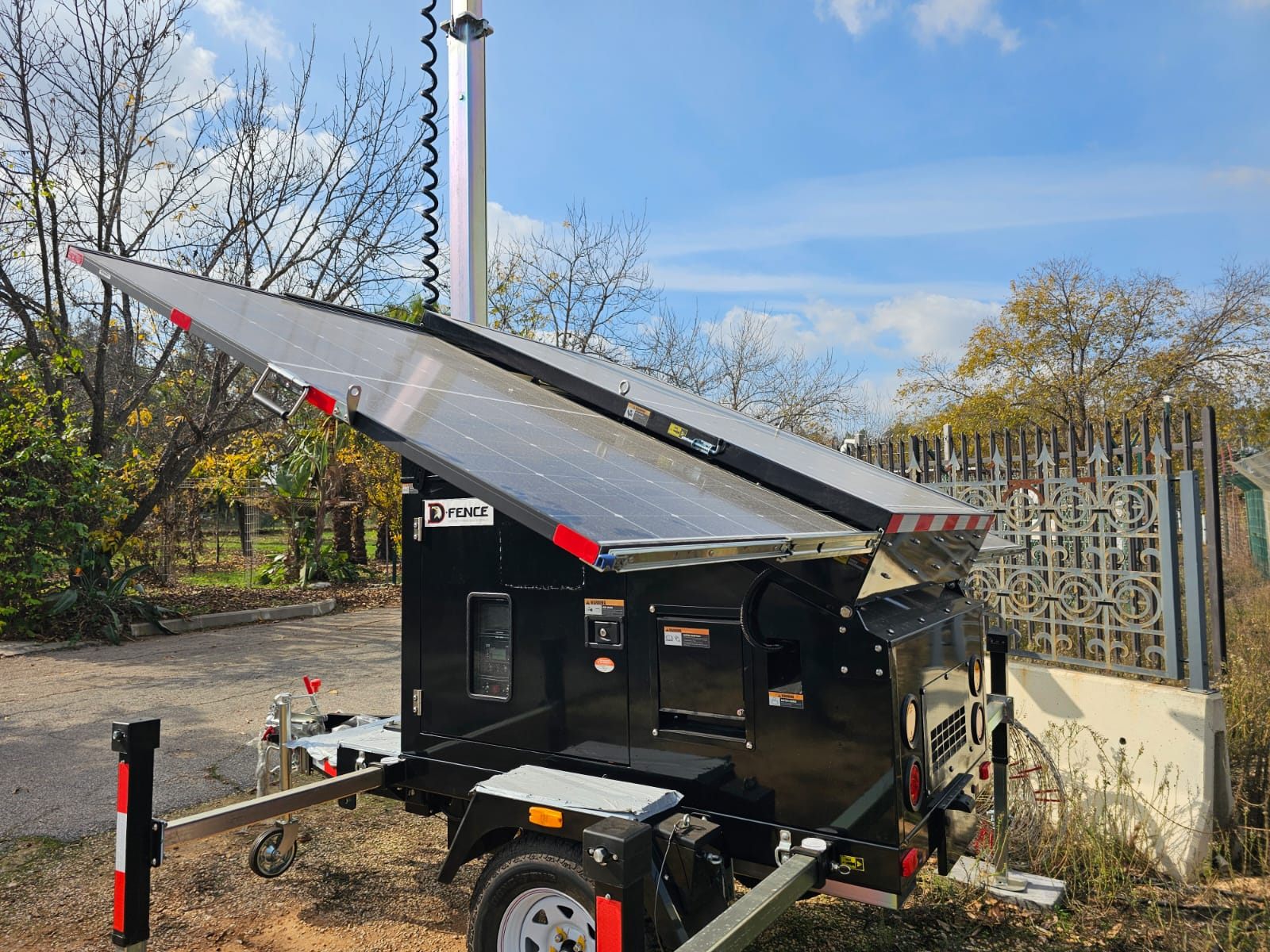
D-DOME runs on the AI-EYE IN THE SKY trailer or on a fixed mast and sends every alert to your command & control, VMS or PSIM. Response stays with your authorised countermeasures, which D-DOME integrates with.

From the first touch to the right response.

  1. Sense

    Radar, RF, Remote ID and EO/IR cameras watch the airspace through 360°.

  2. Correlate

    The soft-logic engine cross-checks signals, identity and flight behaviour for each target.

  3. Score

    Each target gets a level: likely friendly, suspicious, high risk or probable hostile.

  4. Alert

    Operators receive the track, the video and the score in C2, VMS or PSIM.

  5. Respond

    Your team decides, with integration to authorised countermeasures.

Seen in full.

Every image opens full size. Product sheets are shown whole, exactly as D-FENCE publishes them.

Specifications & documents.

SpecificationsD-DOME
System type
Multi-layered aerial threat detection and classification
Detection range
Up to 5 km (radar dependent)
Detection types
Radar, RF signal analysis, EO/IR cameras (optional), acoustic sensors (optional)
Radar
X-band / Ku-band (configurable), 360° azimuth coverage
RF detection
Wideband scanning 300 MHz, 6 GHz (configurable)
Tracking capacity
Up to 200 simultaneous targets
Classification
AI soft-logic engine, probability-based threat score in 4 levels
Video analytics
Any existing IP camera via ONVIF / RTSP; drones up to 2 km with long-range optics
Integration
C2, VMS, PSIM, radar, cameras, non-kinetic systems
Communication
IP / fibre / 4G / 5G / satellite (optional)
Operating conditions
−20 °C to +55 °C · IP66
Power supply
AC 110/220 V · DC · solar (optional)
Deployment
Fixed · mobile (AI-EYE IN THE SKY trailer) · rapid deployment
Trailer version (ALERT NOW)
Coverage up to 3 km · up to 8.5 days of operation · solar + battery
Compliance
CE, RoHS (other certifications on request)

Specification text, ready for your tender.

Copy it into your specification. It describes the system by what it must do, so any alternative has to meet every point.

D-DOMETender specification textDatasheet
  1. General

    The system shall be D-DOME by D-FENCE Electronic Fencing and Security Systems Ltd. (ISO 9001:2015 certified quality management), or an approved equivalent that meets every requirement in this section.

  2. Function

    Multi-sensor drone detection that fuses radar, RF, Remote ID and EO/IR into one threat score, and alerts your control room early.

  3. The system shall provide

    • Radar tracking: Continuous tracking of location, speed and flight path, 360° in azimuth.
    • RF signal analysis: Detects drone control links across 2.4 GHz, 5.8 GHz and 900 MHz and flags protocol anomalies.
    • Remote ID: Reads the identity, position and telemetry broadcast by compliant drones.
    • AI vision: EO/IR cameras detect, classify and track drones and their approach vectors.
    • EMF analysis: Flags abnormal electromagnetic signatures that may indicate advanced payloads or non-standard systems.
    • Behaviour analysis: Trajectory, loitering and approach patterns toward sensitive zones.
    • Fibre-optic drone indicator: A radar target with no RF signal is flagged as a suspected fibre-optic drone.
    • Camera tamper detection: Existing cameras report blinding, laser dazzle, signal blocking and jamming.
    • Open integration: C2, VMS, PSIM, radar, cameras and authorised non-kinetic systems.
  4. Technical requirements

    • System type: Multi-layered aerial threat detection and classification
    • Detection range: Up to 5 km (radar dependent)
    • Detection types: Radar, RF signal analysis, EO/IR cameras (optional), acoustic sensors (optional)
    • Radar: X-band / Ku-band (configurable), 360° azimuth coverage
    • RF detection: Wideband scanning 300 MHz, 6 GHz (configurable)
    • Tracking capacity: Up to 200 simultaneous targets
    • Classification: AI soft-logic engine, probability-based threat score in 4 levels
    • Video analytics: Any existing IP camera via ONVIF / RTSP; drones up to 2 km with long-range optics
    • Integration: C2, VMS, PSIM, radar, cameras, non-kinetic systems
    • Communication: IP / fibre / 4G / 5G / satellite (optional)
    • Operating conditions: −20 °C to +55 °C · IP66
    • Power supply: AC 110/220 V · DC · solar (optional)
    • Deployment: Fixed · mobile (AI-EYE IN THE SKY trailer) · rapid deployment
    • Trailer version (ALERT NOW): Coverage up to 3 km · up to 8.5 days of operation · solar + battery
    • Compliance: CE, RoHS (other certifications on request)
  5. Detection sequence

    1. Sense: Radar, RF, Remote ID and EO/IR cameras watch the airspace through 360°.
    2. Correlate: The soft-logic engine cross-checks signals, identity and flight behaviour for each target.
    3. Score: Each target gets a level: likely friendly, suspicious, high risk or probable hostile.
    4. Alert: Operators receive the track, the video and the score in C2, VMS or PSIM.
    5. Respond: Your team decides, with integration to authorised countermeasures.
  6. Submittals

    Before installation, the contractor shall submit the manufacturer's datasheet, the installation instructions and the zone layout for approval.

Discuss your project.

Tell us the site, the threat and the line. D-FENCE engineers will propose the right barrier, sensor and platform, ready for your integrator.
Build the full line.